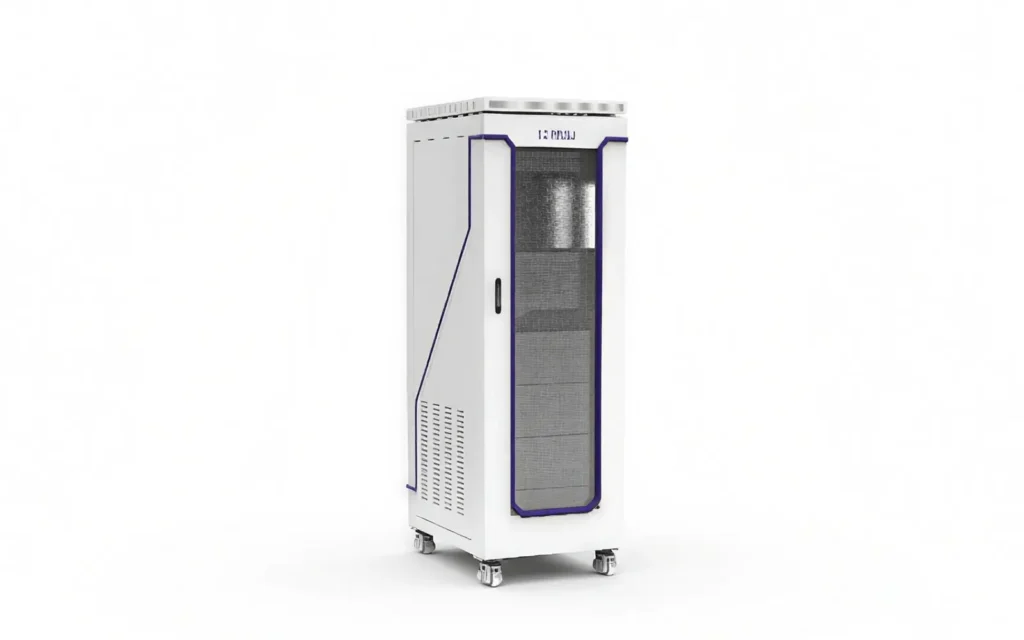
Rationale: AVL presents its energy and grid business as a first-level entry point separate from automotive navigation (Industrial Energy Solutions), reusing the hardware and metrology of vehicle battery testing while addressing a different customer profile and vocabulary. Tsing Standard already covers equipment supply, system integration, engineering construction, testing and acceptance for storage, and holds an own-delivery case with minute-resolution measured site data — sufficient content to justify a separate section.
±0.05
Voltage & current accuracy
±0.1
Ah / Wh metering
The return on a storage project depends on whether the sizing basis and the acceptance definition hold
Configurations are commonly derived from installed capacity and rule-of-thumb C-rates, without capturing the site load curve, output data or transformer headroom. Load volatility, the distribution of peak and off-peak periods and the billing method all differ, so the same configuration performs very differently from site to site; a configuration not sized against the site cannot support an investment decision.
Energy-charge saving, maximum-demand saving and regeneration reuse rest on different calculation bases. The demand saving presupposes maximum-demand billing and requires separate assessment where billing is by transformer capacity; regeneration reuse describes the source of the energy and the proportion absorbed internally, and cannot be added to time-of-use price-spread savings. Combining the three produces a figure above what is actually achievable.
Where rated capacity, round-trip efficiency and power response are adjudicated on data reported by the system’s own BMS, no independent means of verification exists. Where the contract does not state which side is metered, whether auxiliary consumption is included, what instruments are used and under what test conditions, differences between the two parties’ readings cannot be resolved. Round-trip efficiency measured with and without auxiliary consumption typically differs by 3 to 5 percentage points.
Where rated capacity, round-trip efficiency and power response are adjudicated on data reported by the system’s own BMS, no independent means of verification exists. Where the contract does not state which side is metered, whether auxiliary consumption is included, what instruments are used and under what test conditions, differences between the two parties’ readings cannot be resolved. Round-trip efficiency measured with and without auxiliary consumption typically differs by 3 to 5 percentage points.
Where the interface between the equipment supplier and the civil contractor is not established by drawing and interface list, deviations in foundation dimensions, cable routing, lifting access and fire conditions are found only once equipment arrives on site. Where the grid-connection applicant, responsibility for approval delays, and custody and insurance before energisation are not agreed, no party carries the schedule risk.
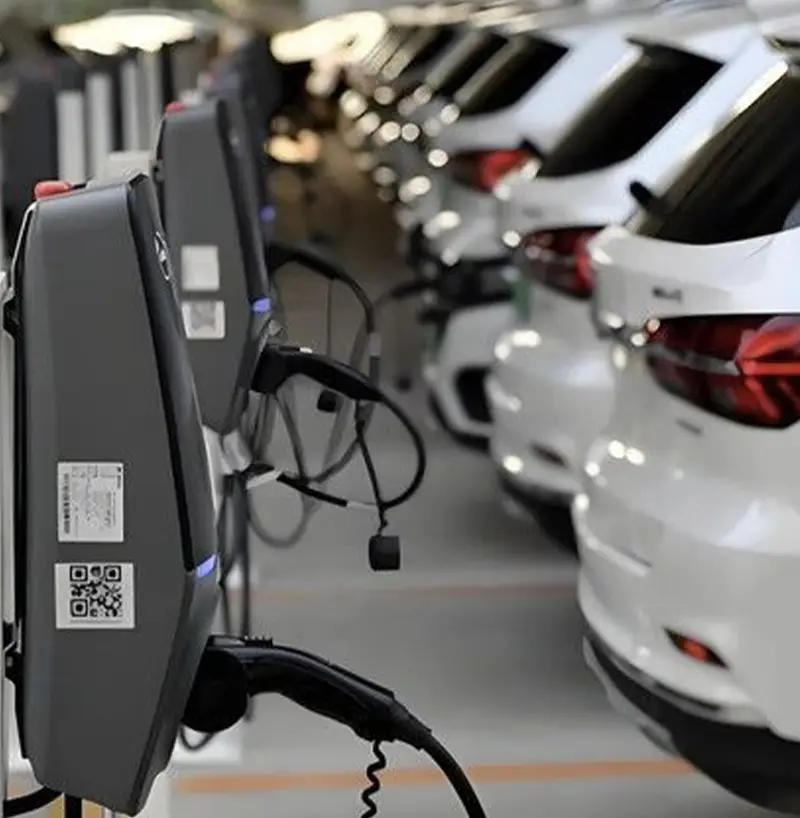
The business covers three scenarios — residential, commercial and industrial, and utility-scale storage — providing equipment supply, system integration, engineering construction and acceptance testing. Equipment scope is organised in six layers: the battery side (cells and modules, clusters and sub-racks, prefabricated DC containers of the 5 MWh and 20 MWh class, and a three-tier BMU/BCU/BAMS battery management system); conversion and step-up (PCS, step-up transformers, local control cabinets); grid connection and distribution (MV switchgear, combiner cabinets, protection devices, metering and point-of-connection equipment); control and software (EMS, dispatch strategy, SCADA and data-platform integration); auxiliary systems (thermal management, fire protection, monitoring, station power); and test and acceptance equipment.
Three supply modes are distinguished and itemised in the supply contract. Our own design: design and intellectual property belong to Tsing Standard. Supplied by us: we select, procure, integrate, commission and warrant the equipment as single point of responsibility. Qualified supply chain: the equipment itself comes from an audited supplier while we organise the work and carry integration and acceptance responsibility. Power electronics, control and test equipment are of our own design or integration; the battery itself and part of the primary electrical equipment come through the qualified supply chain.
Engineering delivery runs through eleven stages: site survey and load audit, concept design and business case, preliminary design, civil interface conditions, grid-connection application support, manufacture and factory acceptance, packing and transport, installation and wiring, commissioning and grid connection, performance acceptance, and training and handover to operations. Each stage carries a defined deliverable: the survey stage produces a survey report and preliminary sizing recommendation; the concept stage produces a technical proposal and a benefit model stating its calculation basis and boundary conditions; the civil-interface stage produces the civil condition drawings and interface list; and the grid-application stage produces the grid-connection technical dossier.
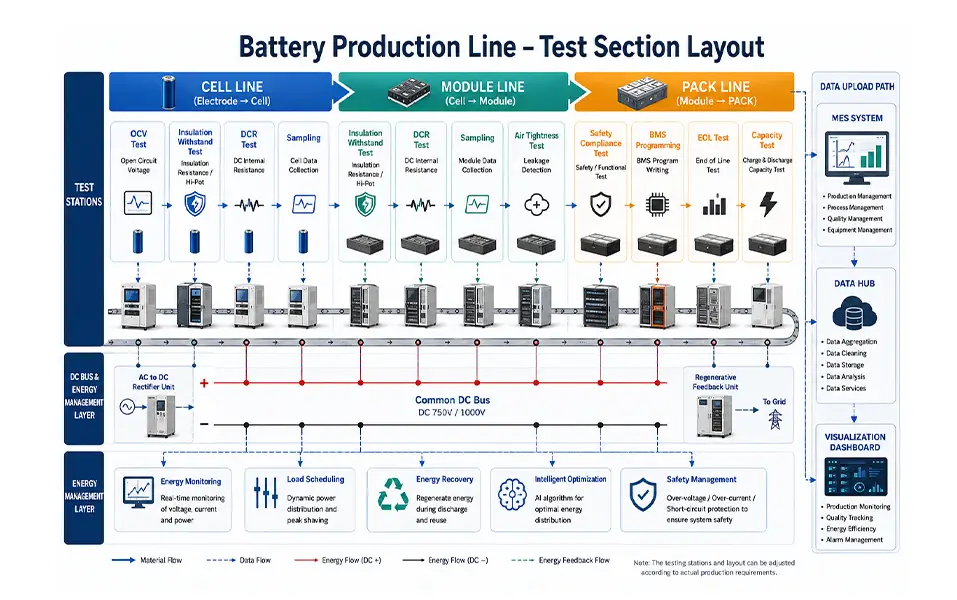
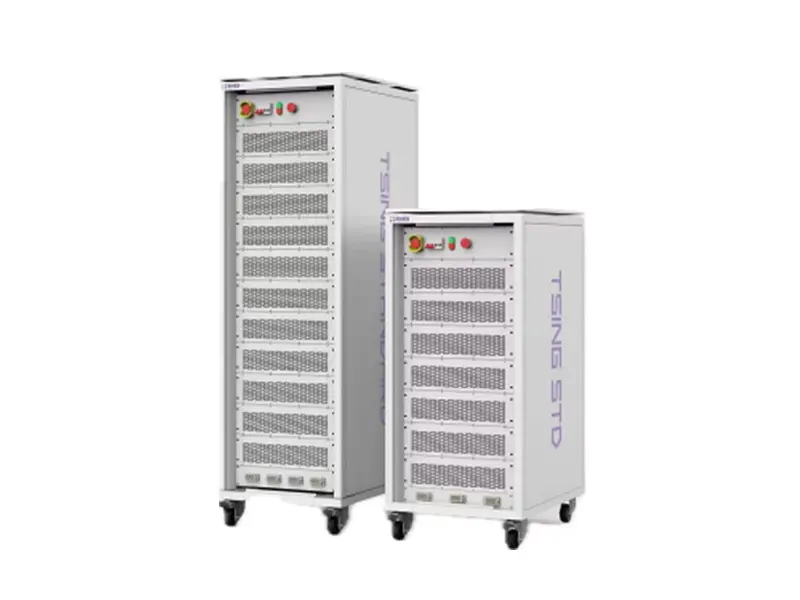
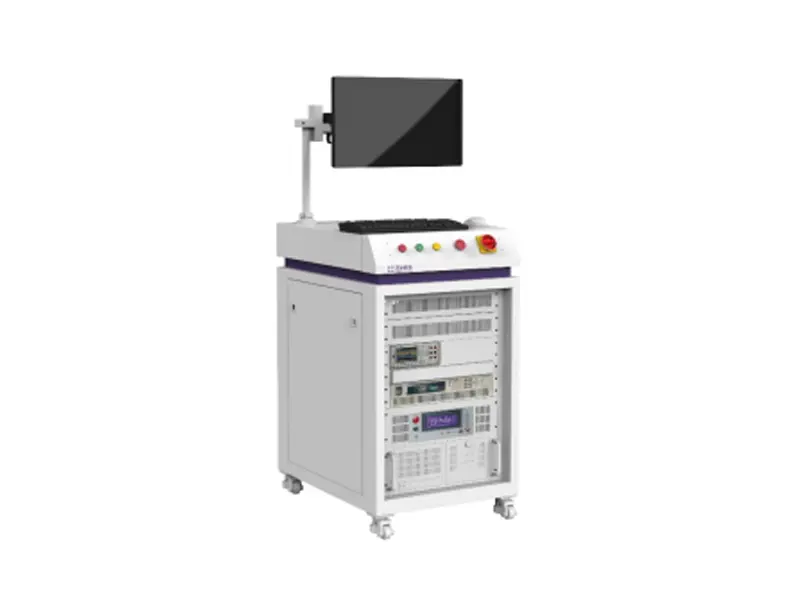
Up to 2500 V/12 MW; Suitable for prefabricated DC cabins and battery clusters; Capacity testing, operating condition simulation, cycle life, overcharge and over discharge; Compliant with GB/T 44026, GB/T 36276, IEC, UL
Internal consumption of feedback energy on the DC side, peak valley scheduling, and demand control; EMS Strategy and Scheduling Logic
Captures and analyses the load curve, transformer rating and headroom, point-of-connection conditions, tariff and billing method, site loading and fire conditions, producing a survey report and preliminary sizing recommendation. All subsequent calculations are based on survey data rather than on rule-of-thumb values.
Process equipment and the storage system are connected to a single DC bus, so regenerated energy is absorbed internally on the DC side rather than exported at low value or dissipated as heat, and recharge is concentrated in low-price windows. The configuration suits processes with a highly volatile production load that also regenerate discharge energy — cell formation and grading, electroplating, arc furnaces and injection moulding.
Energy-charge saving, maximum-demand saving and regeneration reuse are calculated separately and not aggregated. The model states the tariff source, the period covered, the billing method and the capacity ramp-up factor, and sets out the conditions on which the demand saving depends.
Rated capacity, round-trip efficiency and power response are metered separately on the DC and AC sides by an independent power analyser. Metrology: voltage and current to ±0.05% F.S., Ah and Wh within ±0.1%, sampling interval below 1 ms. The measurement method, pass conditions and report format for each acceptance item are agreed in the acceptance outline.
A five-step process applies: benefit is verified against the actual electricity bill and billing basis; recharge windows, SOC targets and demand thresholds are reviewed and the operating parameters fixed; monthly data is accumulated into an operating-performance report; a joint verification report is produced from the primary sample month together with the bill.
Storage delivery verified against minute-resolution operating data
The cell formation and grading line has a highly volatile load, and regenerated discharge energy was either exported at low value or constrained. High instantaneous AC-side peaks placed capacity pressure on the transformer and site distribution.
The formation line and the storage system were connected to a single DC bus, with charge and discharge managed by the Tsing Standard dispatch system: recharge concentrated in low-price windows and regenerated energy absorbed internally on the DC side. Scope covered system design, equipment supply, integration, commissioning and post-commissioning data tracking.
Minute-resolution site data, April 2026: AC-side peak reduced by 1,086 kW, from a line peak of 2,762 kW to 1,676 kW on the AC side; peak-period purchases fell from 101.43 MWh to 8.87 MWh; 94.8% of AC recharge fell within the off-peak window; of 5.67 MWh regenerated that month, 5.64 MWh was absorbed by storage, an absorption rate of 99.5%; AC-side reverse export was 0.19%. April averaged 29,552 cells per day against a design target of 42,000, i.e. 70.4%, with the project in capacity ramp-up.
Applicability: the configuration suits processes with a highly volatile production load that also regenerate discharge energy, and the demand-charge saving presupposes maximum-demand billing. Comparable sites must be sized individually against their own load curve, tariff structure and transformer rating.
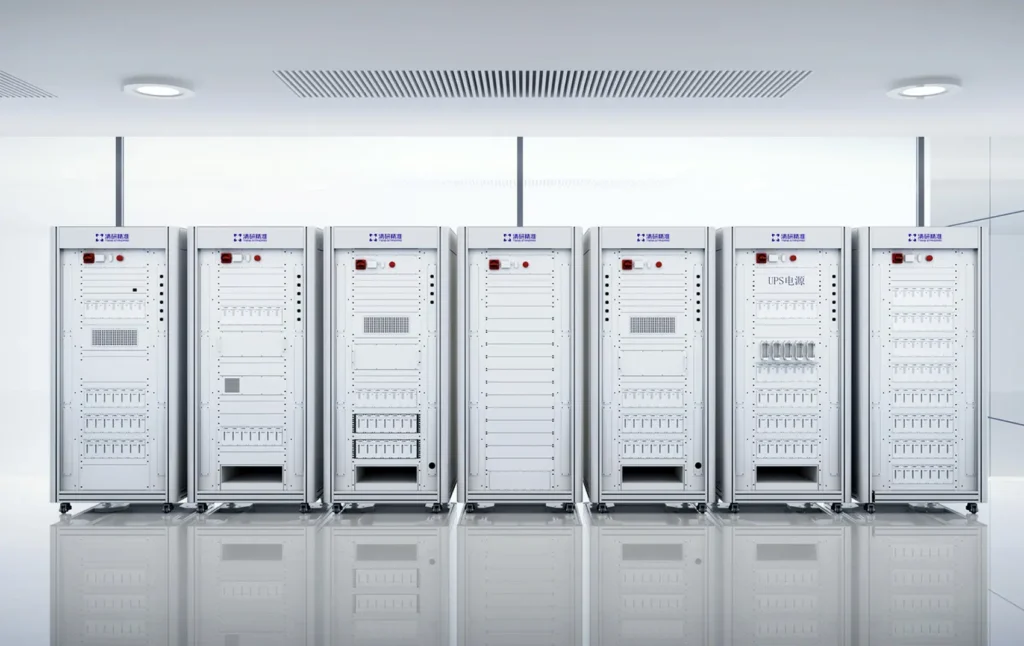
Storage batteries operate at a higher voltage than traction batteries, so end-of-line inspection must support a higher sampling voltage and a wider test range. Factory inspection results for storage products also form the baseline data for subsequent plant acceptance.
Line test equipment was delivered to storage-battery and storage-system manufacturers: pack end-of-line test equipment for AlphaESS; pack-line test equipment for JinkoSolar via Fenghesheng; and a mass-flow leak tester for Zenergy. The equipment uses a plug-in rack architecture, electrical-performance testing supports 2,400 V sampling, and test items are combined according to the customer's process.
All three projects have been delivered or are in execution. Test items and adjudication thresholds are defined by configuration, and the same metrology is used as at storage-plant site acceptance, so factory inspection data and site acceptance data are comparable on a single basis.